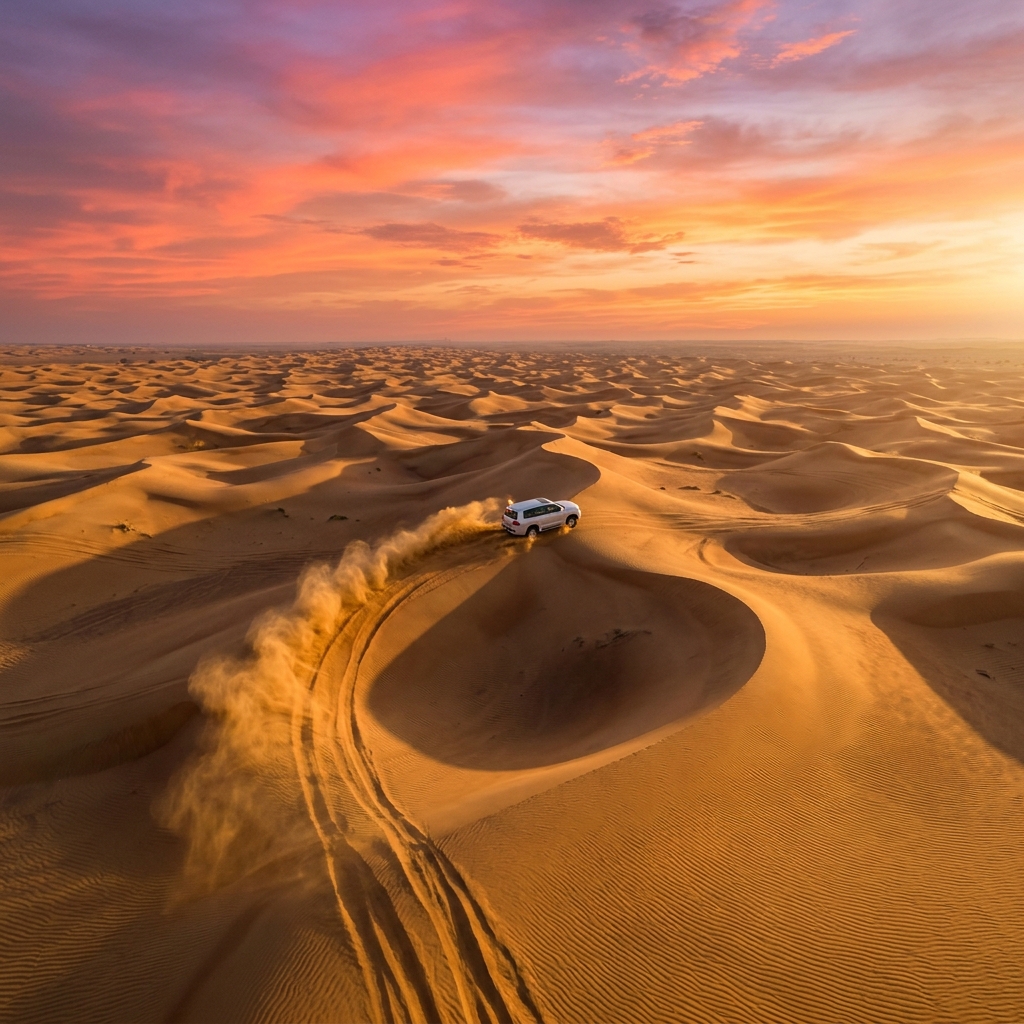
Why a Desert Safari Should Be at the Top of Your Dubai Bucket List
There's something about the Arabian desert that changes people. Maybe it's the way the late afternoon sun paints the dunes in shades of amber and rose. Or perhaps it's the silence — a rare commodity in a city as electric as Dubai — broken only by the soft whisper of sand shifting under an evening breeze.
A desert safari isn't just an activity you tick off a list. It's the experience that travellers talk about for years. The one that makes friends back home lean in and say, "Tell me more." And in 2026, with operators like Sougat Tours raising the bar on what a safari can be, there's never been a better time to book one.
Whether you're a first-timer wondering what dune bashing actually feels like, or a returning visitor looking for something beyond the standard package, this guide has you covered — from choosing the right safari type to practical tips that most travel blogs forget to mention.
Types of Desert Safaris: Which One Is Right for You?
Not all desert safaris are created equal. Dubai offers several distinct experiences, each with its own rhythm and atmosphere. Here's how they compare:
Morning Desert Safari
Best for early risers and families with young children, the morning safari departs around 8–9 AM and wraps up by noon. You'll catch the desert in cooler temperatures and softer light.
What's included:
- Dune bashing in a 4x4 Land Cruiser (30–40 minutes)
- Sandboarding on the dunes
- Camel riding
- Refreshments and photo stops
Who it's perfect for: Travellers short on time, families with toddlers, photographers chasing morning light, and anyone who prefers cooler temperatures.
Price range: AED 150–250 per person
Evening Desert Safari (Most Popular)
This is the classic — the one you've seen all over Instagram. Departing around 3–4 PM, it runs through sunset and into the starlit evening, ending around 9 PM.
What's included:
- Thrilling dune bashing during golden hour
- Sunset photo stop at the highest dune
- Arrival at a traditional Bedouin-style camp
- Camel riding, sandboarding, and henna painting
- Live entertainment — belly dancing, Tanoura fire shows
- BBQ dinner buffet with vegetarian options
- Shisha under the stars
Who it's perfect for: Couples, groups of friends, first-time visitors, anyone who wants the full Arabian Nights experience.
Price range: AED 180–350 per person
Overnight Desert Safari
For the traveller who wants something truly immersive. After the evening's entertainment, you'll sleep under a canopy of stars in a luxury desert camp, waking to a sunrise that will redefine your understanding of "golden hour."
What's included:
- Everything in the evening safari, plus overnight accommodation
- Stargazing session (the desert sky is remarkable)
- Sunrise breakfast
- Morning nature walk
Who it's perfect for: Honeymoons, photography enthusiasts, nature lovers, anyone wanting a genuinely unforgettable memory.
Price range: AED 400–800 per person
Private VIP Desert Safari
For those who prefer exclusivity. A dedicated vehicle, private camp setup, and customised menu. Some operators offer falcon experiences, live cooking stations, and champagne service.
Price range: AED 800–2,500 per group
What Does Dune Bashing Actually Feel Like?
Let's address the question everyone asks: is it scary?
Honestly? The first dip over a dune crest will make your stomach drop — in the best possible way. Think of it as a natural roller coaster, with your skilled driver navigating the vehicle up steep sand faces and sliding down the other side at angles that seem impossible. The entire cabin tilts, sand sprays against the windows, and you'll hear a mix of screaming and laughing from every seat.
Here's what most guides won't tell you: the experience depends heavily on your driver. At Sougat Tours, our drivers hold professional desert driving certifications and have years of experience reading the terrain. They know exactly how far to push the thrill without crossing into discomfort.
Tips for dune bashing:
- Sit in the front seat for a calmer ride, or the back for maximum excitement
- Don't eat a heavy meal beforehand
- Motion sickness patches work well if you're prone to car sickness
- Keep your camera secured — the jolts are real
What to Wear and Pack
The desert has its own dress code, and it's simpler than you'd think:
Clothing:
- Lightweight, breathable fabrics (cotton or linen work beautifully)
- Loose-fitting trousers or shorts — avoid anything too tight
- Closed-toe shoes for dune activities (you can switch to sandals at camp)
- A light scarf for women (useful as sun protection and for photos in traditional dress)
Essentials:
- High-SPF sunscreen (the desert sun is deceptively strong, even in winter)
- Sunglasses with UV protection
- Fully charged phone or camera
- A light jacket or shawl for evening safaris (November–March temperatures can drop to 15°C after sunset)
- Cash for optional extras and tips
Leave behind: High heels, expensive jewellery, bulky bags
The BBQ Dinner Experience
The evening safari's BBQ dinner is more than just a meal — it's an experience wrapped in atmosphere. Picture long, low tables set on carpeted sand, illuminated by lanterns and surrounded by the warm glow of a campfire.
Typical menu highlights:
- Grilled lamb chops, chicken tikka, and beef kebabs
- Hummus, tabbouleh, fattoush, and fresh Arabic bread
- Grilled vegetables and mixed salads
- Saffron rice with nuts and dried fruits
- Luqaimat (sweet dumplings) and fresh fruit for dessert
- Unlimited soft drinks, Arabic coffee, and tea
Most operators offer vegetarian and halal options as standard. If you have specific dietary requirements — vegan, gluten-free, or allergies — mention them when booking.
Best Time of Year for a Desert Safari
| Season | Temperature | Experience | Crowd Level |
|---|---|---|---|
| Nov–Feb | 15–28°C | Perfect weather, stunning sunsets | High |
| Mar–Apr | 22–35°C | Warm but manageable, fewer crowds | Medium |
| May–Sep | 35–48°C | Extreme heat, morning safaris only | Low |
| Oct | 28–38°C | Warming down, good value | Medium |
Our recommendation: Book between November and March for the most comfortable experience. If you're on a budget, October and late April offer good value with manageable heat.
Safety: What You Need to Know
Desert safaris are one of Dubai's safest tourist activities, but they come with common-sense considerations:
- Dune bashing is not recommended for pregnant women, people with serious back or neck conditions, or children under 3
- All licensed safari vehicles carry first aid equipment and communication devices
- Seatbelts are mandatory during dune bashing
- Operators like Sougat Tours carry comprehensive insurance and use only certified drivers
- Camels are gentle and well-trained — handlers are always present
How to Book the Best Desert Safari Deal
With dozens of operators in Dubai, how do you choose? Here's our honest advice:
- Check licensing — registered operators are listed with Dubai Tourism (DTCM)
- Read recent reviews — focus on reviews from the last 3 months
- Compare what's included — the cheapest price often means missing key elements
- Ask about group size — smaller groups (8–15 people) mean better service
- Book direct for better prices — avoid reseller markups
At Sougat Tours, all our desert safari packages include hotel pickup and drop-off from Dubai hotels, licensed professional drivers, comprehensive insurance, and a satisfaction guarantee.
Ready to experience the magic? Browse our desert safari packages or contact our team to find the perfect safari for your group.
Frequently Asked Questions
How long is a typical desert safari?
Morning safaris run approximately 4 hours, evening safaris 6–7 hours, and overnight safaris about 16 hours.
Is a desert safari suitable for children?
Absolutely. Children love the camel rides, sandboarding, and henna painting. For children under 3, we recommend the morning safari as it skips the more intense dune bashing.
Can I go on a desert safari during Ramadan?
Yes. Safari operations continue during Ramadan, though alcohol service may be restricted and entertainment schedules may differ.
Will I see wild animals?
The Arabian desert is home to the Arabian Oryx, desert foxes, and various bird species. Sightings are not guaranteed but are a beautiful bonus when they happen.
What happens if the weather is bad?
Sandstorms and heavy rain can cause cancellations. Reputable operators offer full refunds or free rebooking in these cases.